
 Membership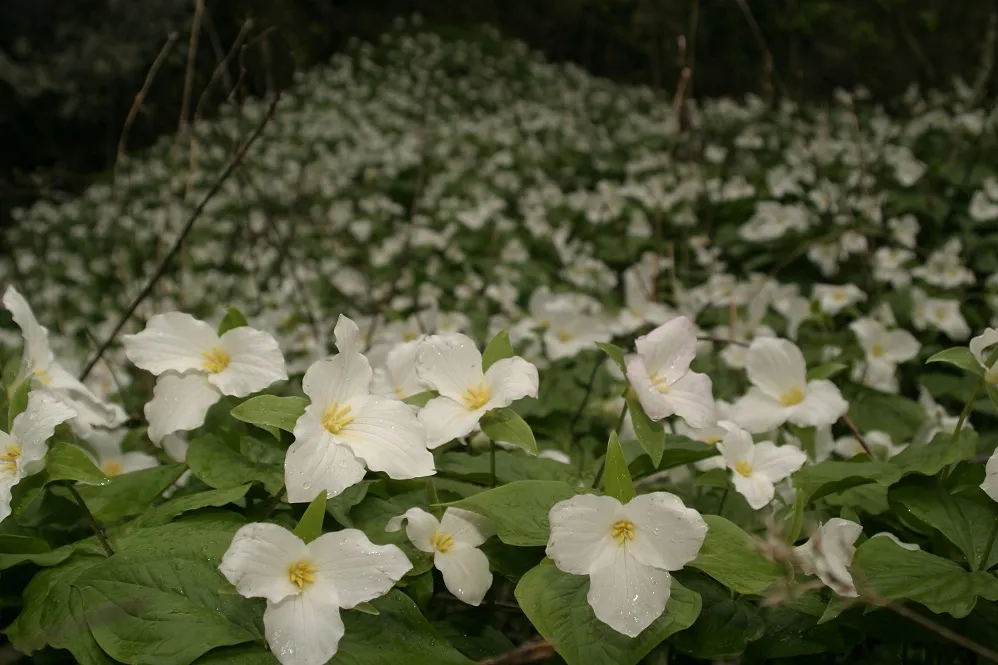
The Cincinnati Zoo has been dedicated to sustainability and conservation not only on grounds within its Avondale location but at its off-grounds property as well. In 1995, a 529-acre farm called Bowyer Farm was willed to the Cincinnati Zoo & Botanical Garden with the guideline that it could never be developed unless it is to further the mission of the Zoo.
Since then, the property has grown to 600+ acres, and includes a native plant program, wetland restoration, a browse program, a cheetah run area, and sun and sheep farming.


Native Plant Program
Eastern North America has some of the richest floral diversity that can be found anywhere. However, due to habitat loss, invasive species, and the pressures of human encroachment, we are losing some of this diversity. It is our hope that through the Native Plant Program, and our goals of conservation, education, and promotion of native plants, we will be able to help preserve this floral diversity.
To accomplish these goals, we work with government entities, nurseries, and conservation organizations. We work on developing conservation strategies regarding local native flora, and create an awareness of native plant issues, such as invasive species. Our plan is to continue to develop working relationships with organizations in the field to increase the efficiency of conservation efforts.
In collaboration with CREW’s native plant lab, we are working on developing methods for propagating and growing many of the more challenging to grow native plants. Our main focus for this work has been on native terrestrial orchids as well as the genus trillium. We hope that by creating a process for growing these that we can later share with the industry, we will reduce the pressure on wild populations.
In addition, Bowyer Farm also supports the work that CREW does on federally endangered species such as northern monkshood, and Kentucky clover, providing the plants a place to grow on after life in a test tube.
By working together, we are able to help protect wild populations while also supporting the propagation of plants for reintroduction into the wild when needed.
To connect our three main goals of conservation, education and promotion of native plants, Bowyer farm is also home to native plant trial beds. These are both the raised beds in the growing area as well as many of the landscape beds surrounding the barns and nursery area at the farm.
In the raised beds, newly acquired plants and those which are part of research projects are placed where they can be carefully maintained and monitored. Each plant is carefully placed and labeled. This allows us to see which new plants might make the best candidates for propagation and introduction to the industry. In addition, these beds allow us to monitor our research plants enabling us to make notes on their success, time seed collection and monitor other metrics.
In our landscape, plants are trialed to show what they might look like once matured in a landscape and to showcase their features outside of a pot.
The native plant movement has grown in the last decade. The Native Plant Program at Bowyer Farm promotes scientifically based information so sound decisions can be made. By hosting talks, tours, workshops and conferences we hope to promote issues vital to native flora.
Combining these opportunities with our unique position to share our knowledge with both the landscaping public, and the nursery industry, simultaneously, we are able to develop the desire for and the availability of native plants.
It is a goal of the program to promote great native plants for the landscape. We choose commercially propagated plants to relieve the pressures of native plants being dug from the wild.
We also look for great natives that are not readily available, trial them, then promote those to the nursery industry, so that they may be available in the future.
In an effort to promote native flora, select native species will be grown and available for sale to the general public. These plants will be certified as being from a sustainable, commercial source. A portion of the sales from this venture will help fund future projects of the Native Plant Program.
-
 Trillium grandiflorum
 -
 Trillium grandiflorum
 - Rose Pink Orchid
-

Wetlands
Wetlands are among the most productive ecosystems in the world and are comparable to rainforests and coral reefs. They provide numerous benefits to people, fish, and wildlife including protecting and improving water quality, providing fish and wildlife habitats, storing water and mitigating floods, and maintaining surface water flow during dry periods.
There are around 300 species of native plants growing at Bowyer Farm including endangered or plants of special concern for regional conservation organizations.
Browse for Animals
While respecting the conservation theme of the property, the Zoo is also growing food for our animals. Called ‘browse’, birch, willow, hackberry and other species are grown at the farm and collected for distribution at the Zoo. Hay and straw are also farmed at the site. We have planted thousands of trees on the property, which helps pull carbon dioxide out of the atmosphere as well as provide fresh, local food for our animals. Over the past few years, all of Cincinnati Zoo & Botanical Garden’s hay needs have been met from our own farm.
Beekeeping
The Zoo is working to boost pollinator populations, which are in severe decline worldwide, right here in our own community. At Bowyer Farm, we are propagating pollinator-friendly plants, restoring pollinator habitat, and helping support honeybee populations through beekeeping.
Sun and Sheep Farming
Agrivoltaics is the co-location of agricultural production like crop or livestock production or pollinator habitats underneath or next to solar panels. Cincinnati Zoo & Botanical Garden is using agrivoltaics to allow Bowyer farm to stay a farm while reducing our carbon footprint.