
 Membership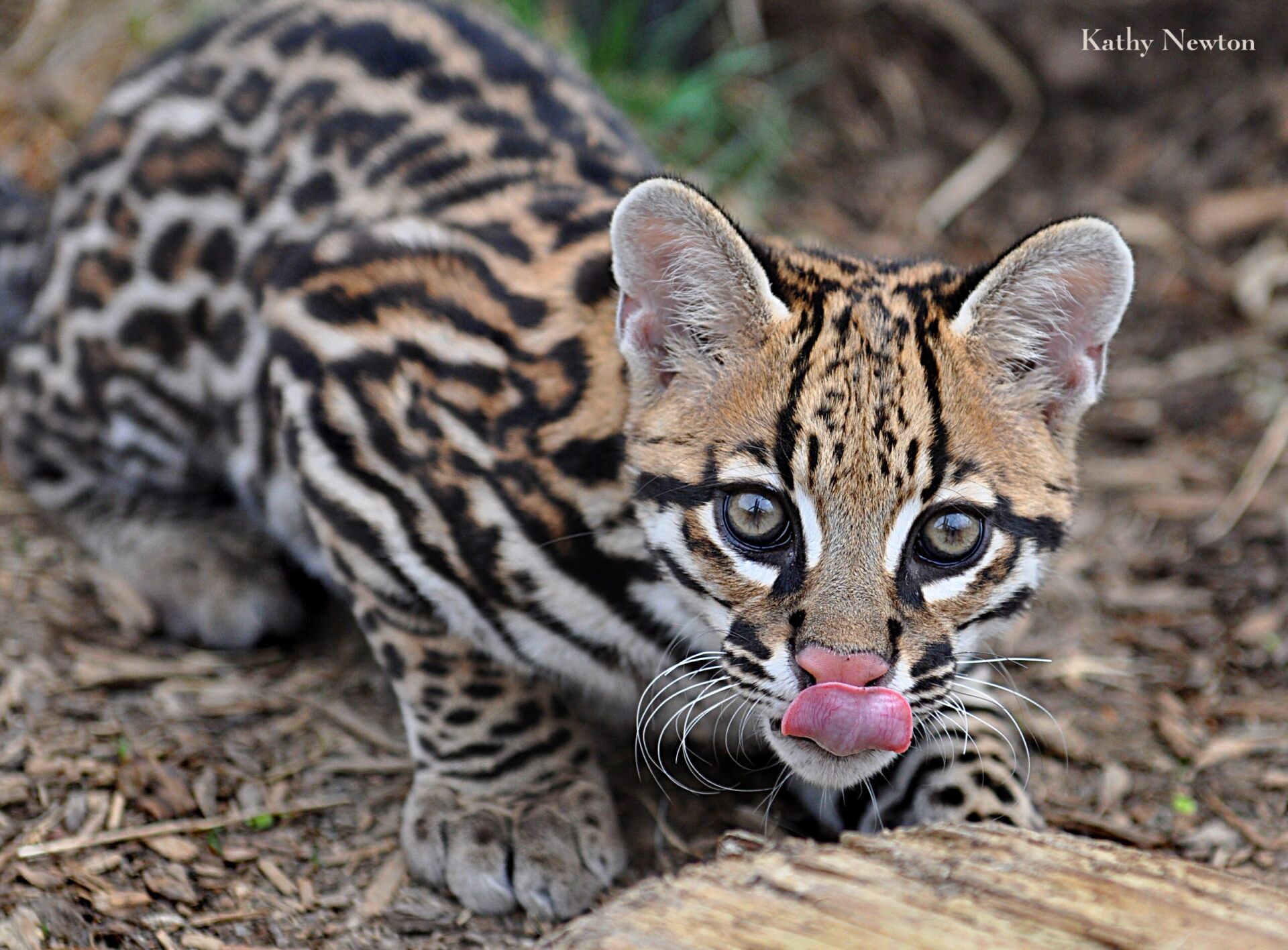


Saving Imperiled Cats
Most of the world’s cat populations are declining due to habitat loss and degradation. Zoo-housed felids serve as assurance populations, helping prevent extinction and providing opportunities for potential reintroduction of zoo-born animals back into the wild.
For over three decades, CREW scientists have been advancing the understanding of felid reproduction through systematic research. These studies have improved the management, welfare, and breeding of imperiled species.
Assisted reproductive technologies (ART) such as artificial insemination, in vitro fertilization, embryo transfer, and cryopreservation of sperm and embryos are essential tools in addressing the conservation and management challenges of these species.
The Imperiled Cat Signature Project has pioneered semen freezing and artificial insemination methods, enabling pregnancies in multiple cat species, including the sand cat, Pallas’ cat, fishing cat, ocelot, jaguar, and tiger.
-
 Ocelot kitten born through frozen-sperm artificial insemination performed by CREW at the Arizona-Sonora Desert Museum.
 -
 CREW performing a reproductive exam on a snow leopard using ultrasound
 - CREW performing an artificial insemination on a tiger
-
 CREW performing an artificial insemination on a jaguar
 -
 Meet Marta, CREW’s life-like Amur leopard training model, created with VETIQO to help scientists practice endoscopic reproductive procedures and teach the public how assisted reproduction supports endangered cats
Current Research
CREW’s Imperiled Cat team advances reproductive science by developing and refining ART to conserve endangered felids. Recent and ongoing projects include:
- Monitoring estrus, pregnancy, and reproductive function through fecal hormone metabolite analysis 1,2,3
- Validating an in-house, automated ELISA immunoassay machine for hormone monitoring in felids using serum and saliva
- Characterizing reproductive physiology of lesser studied felids 4,5
- Developing reliable real time estrus detection tools to improve breeding success6
- Validating computer-assisted semen analysis (CASA) platforms for objective, high-precision evaluation of cat sperm
- Leveraging veterinary expertise to perform comprehensive reproductive health exams that guide evidence-based breeding decisions 7
- Advancing minimally invasive approaches to artificial insemination through laparoscopy and endoscopy 8,9
- Optimizing ovarian synchronization protocols, enabling milestones such as the first jaguar cub born through artificial insemination10,11,12
- Refining soy-based cryomedia to create a cleaner, safer, and more consistent method for freezing cat sperm 4, 13,14
- Creating field-ready semen collection and freezing methods, such as urethral catheterization and ultra-rapid freezing 15,16